
Last updated October 16, 2026
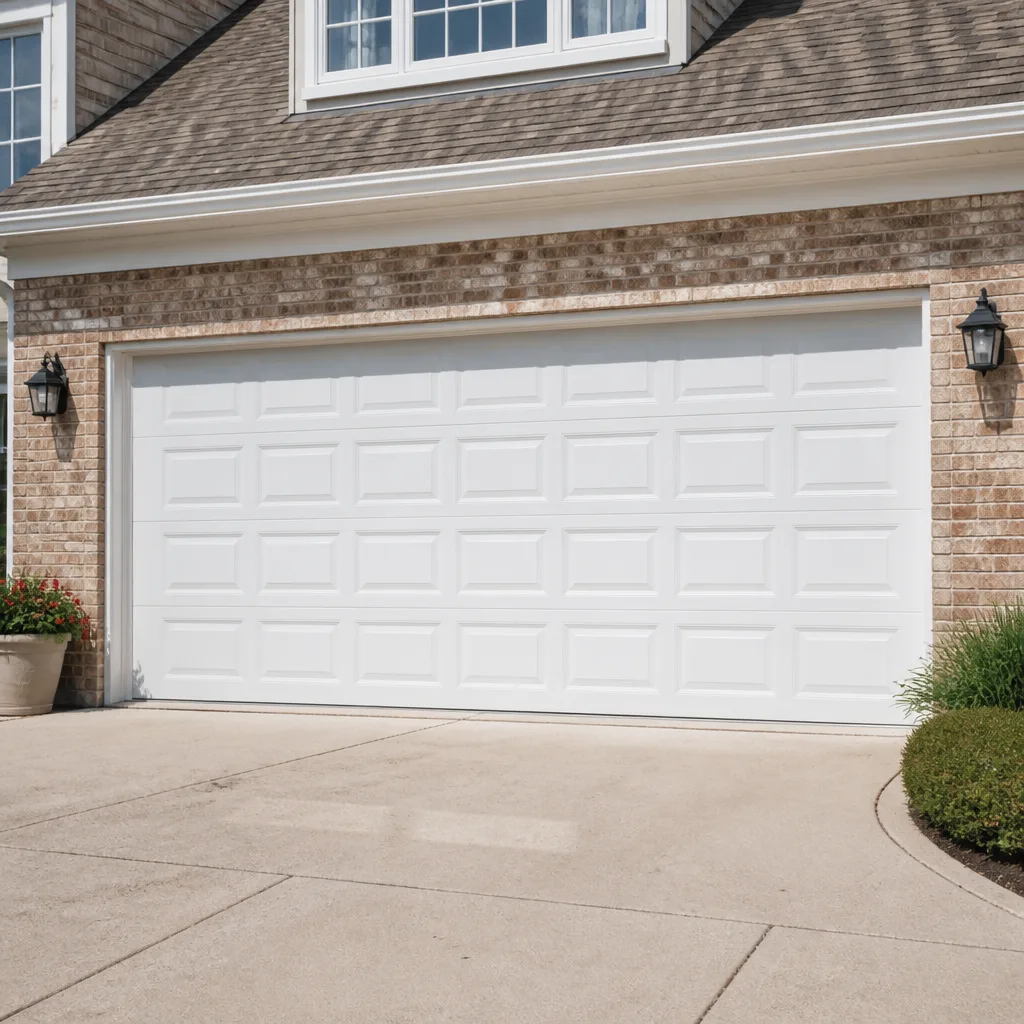 Raised-panel steel
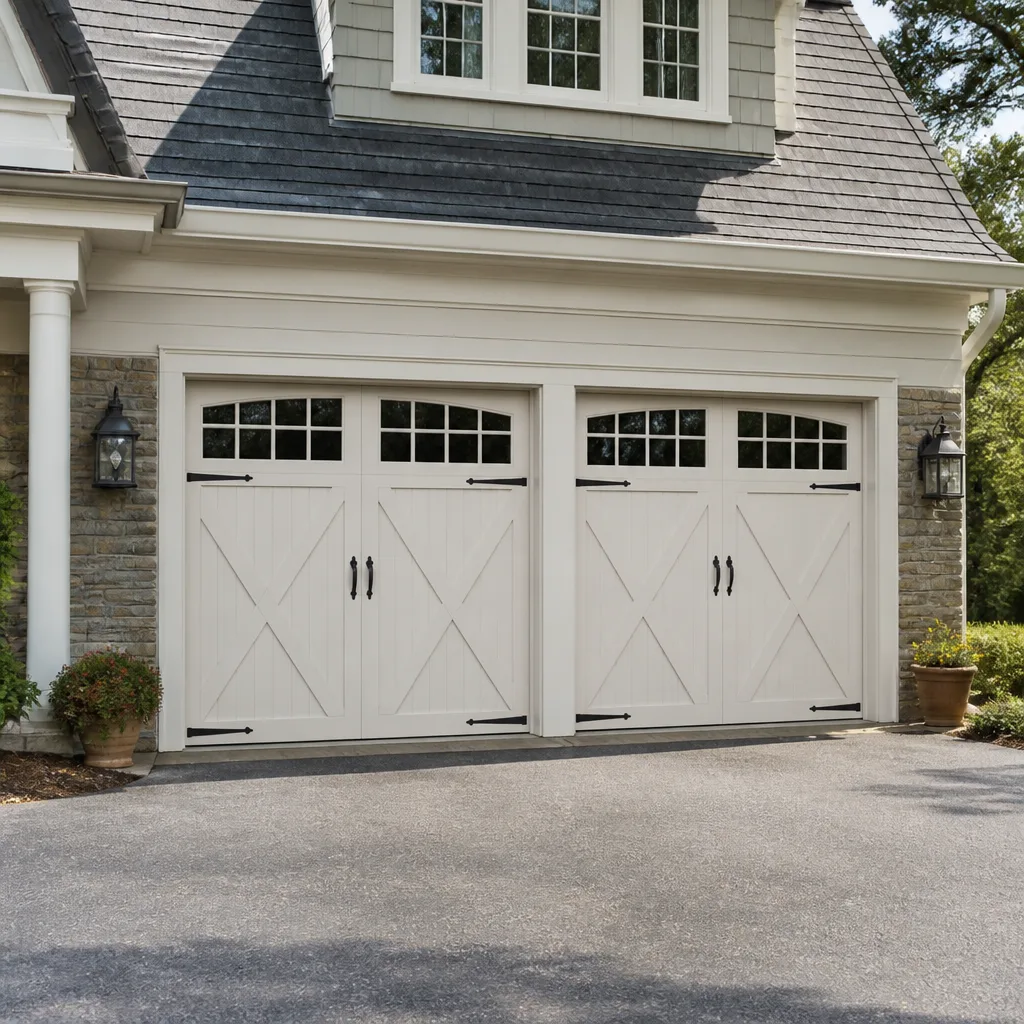 Carriage house
 Modern flush
 Full-view glass
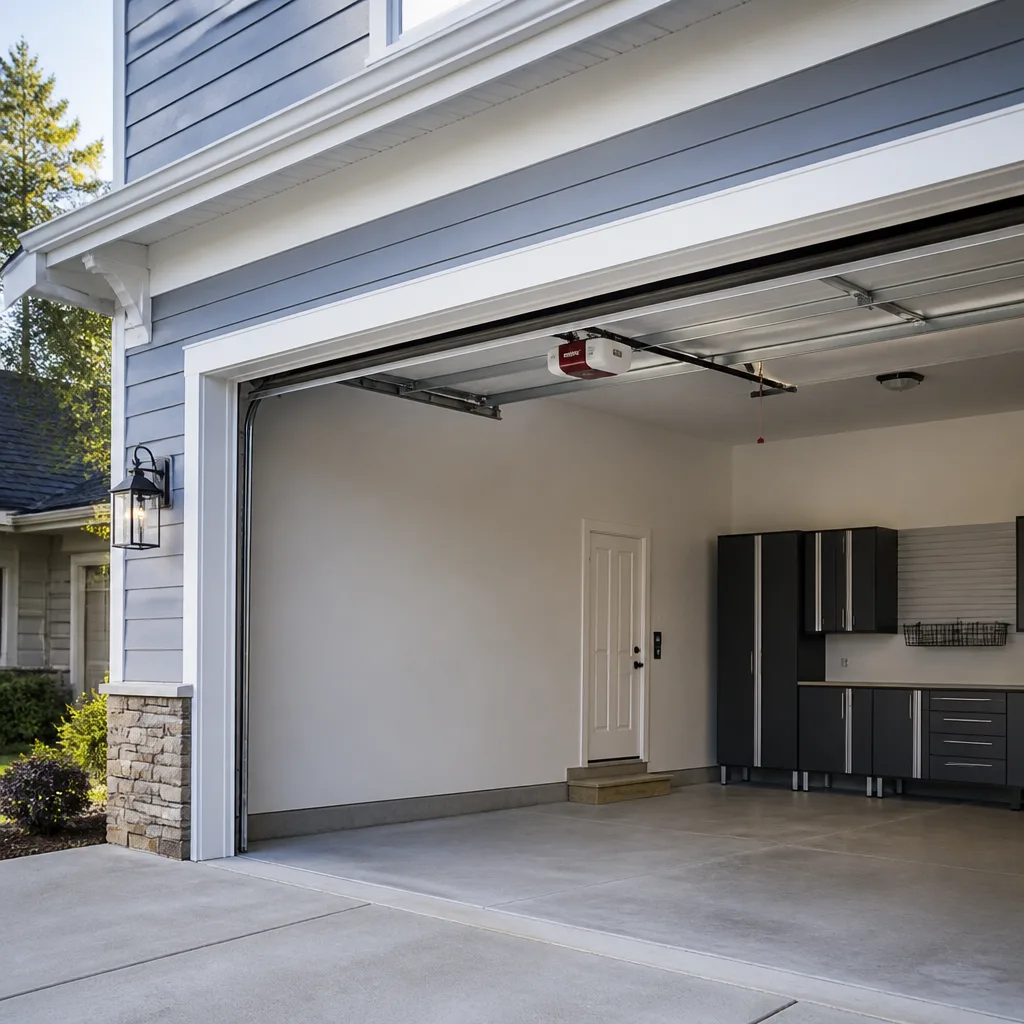 LiftMaster openers
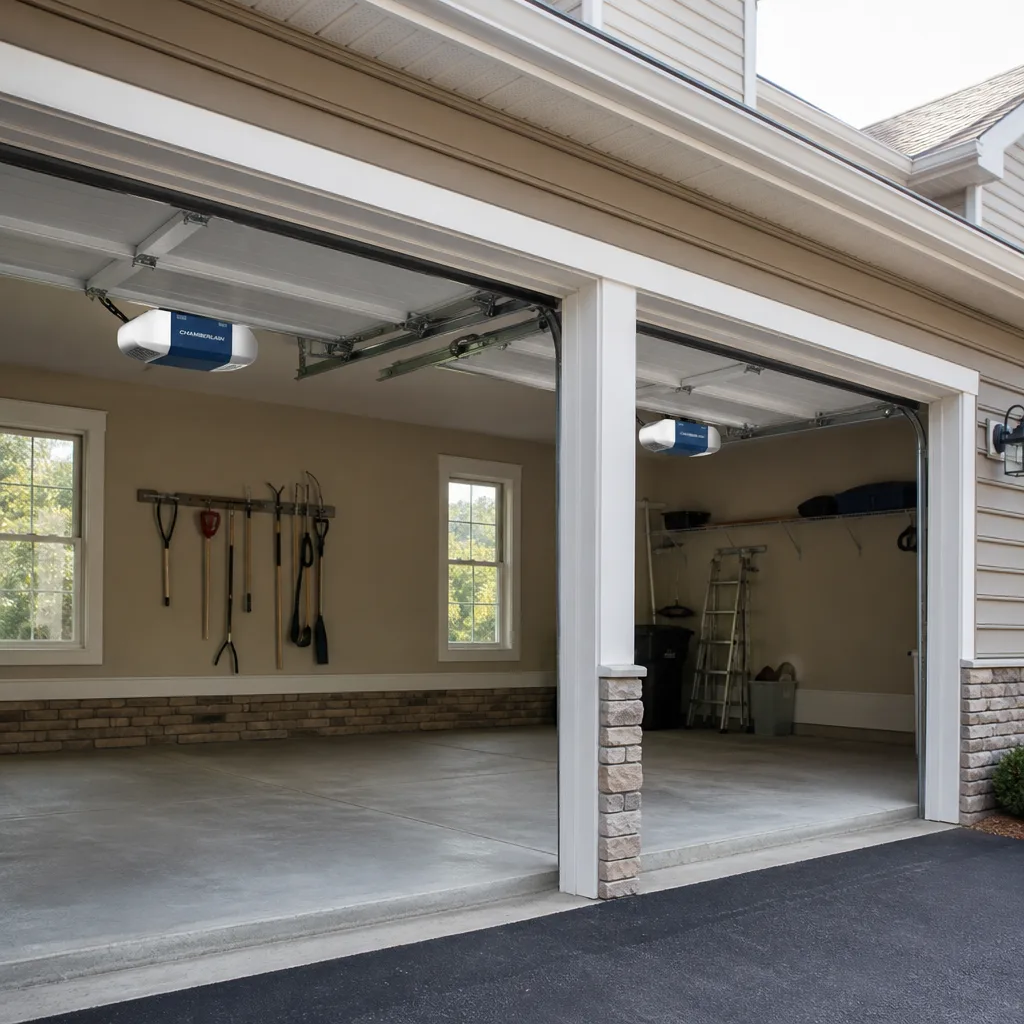 Chamberlain openers
Full 25-point door and opener safety check with every visit - springs, cables, rollers, tracks, and your LiftMaster or Chamberlain opener included
You get a price before we start. It does not change when the truck arrives.
Get your free estimateDIY vs Professional Garage Door: The Fort Worth Homeowner’s Decision Guide
A fully wound torsion spring stores roughly the same kinetic energy as a .357 Magnum round. That’s not a contractor trying to scare you into a service call; it’s basic physics. The honest answer to “should I fix this myself?” depends entirely on what broke. Some garage door tasks are safer than changing a ceiling light bulb. Others can send you to the emergency room before you realize what happened. This guide draws that line task by task, with real Fort Worth pricing, the code implications you probably didn’t know about, and the middle path that saves you money without putting your hands anywhere dangerous.
Quick Answer
In Fort Worth, about 30% of garage door tasks are genuinely safe for a homeowner with basic tools: sensor cleaning, lubrication, weather seal replacement, and rail bolt tightening. The other 70% involve stored energy in springs, cables under tension, or door weight distribution, and those need a trained professional. Attempting a torsion spring replacement yourself can save $200 to $300 on paper, but the failure scenario costs roughly $12,000 and up at a Fort Worth emergency room, assuming you keep the hand. The smart play is knowing which side of the line your problem sits on before you touch anything.
Styles & brands we work with
Table of Contents
- The Real Variable Isn’t Cost: It’s Stored Energy
- Task-by-Task DIY Safety Matrix
- The Real Cost Comparison: DIY vs Pro in Fort Worth
- Fort Worth Code, Permits, and Warranty Traps
- Signs Your DIY Attempt Made the Problem Worse
- The Middle Path: DIY Care Between Professional Visits
- Tools, Parts, and What You Actually Need to Buy
- How to Decide in Under Five Minutes
The Real Variable Isn’t Cost: It’s Stored Energy
Most DIY-vs-pro guides frame the whole decision around what you’ll save. That number matters, but it’s the wrong primary filter. The actual difference between a safe DIY project and a dangerous one is whether you’re dealing with stored energy: a spring that’s wound tight, a cable holding hundreds of pounds, a door that can drop faster than you can pull your hand back.
A garage door is the heaviest moving object in a typical Fort Worth home. A standard 16-foot steel door weighs between 130 and 180 pounds. The torsion spring system above it, when adjusted correctly, is doing most of the lifting. Wind that spring wrong and the energy release is sudden and unforgiving. We’ve seen homeowners in Arlington Heights and Wedgwood try to “just tighten it a little” and end up with a broken wrist, a fractured orbital bone, or a spring through drywall. The physics doesn’t care how careful you think you’re being.
That’s not to say you should call a pro for everything. It means the question isn’t “can I be careful?” It’s “does this specific task require me to interact with stored energy?” We’ll break that down task by task below.
Task-by-Task DIY Safety Matrix
Here’s the honest breakdown. We’ve divided common garage door tasks into three categories, based on what we’ve seen across thousands of service calls throughout the Fort Worth metro.
Safe to DIY: No Stored Energy Involved
- Sensor cleaning and alignment: The photo-eye sensors near the bottom of the door tracks collect dust and pollen, especially during North Texas cedar season. Wipe them with a dry cloth and make sure the small LED lights are aligned. Takes ten minutes, zero risk if the door is in manual mode.
- Lubrication: White lithium grease on the hinges and rollers, a silicone spray on the springs (yes, the springs themselves are safe to lubricate as long as you don’t touch the winding cones or try to adjust anything). Use a spray with a straw attachment. Don’t use WD-40, it’s a solvent, not a lubricant.
- Remote and keypad reprogramming: Reprogramming a LiftMaster or Genie remote is a 30-second job with the learn button on the motor. The instructions are in the manual or printed on the back of the motor unit. No tools required.
- Rail bolt tightening: Loose bolts on the track or rail assembly can be tightened with a standard socket set. If the track itself is bent, that’s a different story.
Proceed with Caution: Risk Is Manageable with the Right Approach
- Bottom weather seal replacement: The rubber strip at the bottom of the door slides out and the new one slides in. Easy on most doors, but you’re working at ground level with the door closed, so the risk is minimal. Buy the right seal profile for your door brand, or it won’t seat properly.
- Roller replacement on a single side: The top and bottom rollers are under track tension, but if you clear the track with the door in the open position and use a flathead screwdriver to bend open the track slightly, you can pop a roller out and in. This is the task where “watch a YouTube video first” is actually reasonable advice. The key is never removing the bottom bracket, which is under cable tension.
- Basic remote range diagnostics: If your opener only works from 15 feet away, check for LED bulb interference. Certain LED bulbs emit frequencies that block Chamberlain and LiftMaster remotes. Swap the bulb first before buying a new opener.
Professional Only: Stored Energy or Structural Risk
- Torsion spring replacement: The horizontal coil above your door that does the heavy lifting. It’s wound under 10 to 14 full turns of tension, depending on the door weight and spring size. The winding bars required are hardened steel, not whatever rod you found at Home Depot, and the stored energy in a fully wound spring is roughly equal to a .357 round. This is the single most dangerous DIY task in a typical American home.
- Extension spring replacement: Stretch springs on either side of the track on older doors. Slightly less dangerous than torsion springs, but they still hold hundreds of pounds of energy, and if the safety cable isn’t run through the core when the new one goes in, a failure turns the spring into a missile.
- Cable replacement: The cables transfer spring power to the door. They’re always under tension when the door is open, and they can sever fingers or throw a crescent wrench across the garage. We handle Garage Door Cable Repair in Fort Worth regularly, and we’ve never once thought “yeah, a homeowner could do this safely with a pair of pliers.”
- Track realignment: If your door binds, jerks, or scrapes one side, the track is out of alignment. Trying to bend it back with a hammer or pry bar usually kinks the metal, which makes the problem measurably worse (and means you’re now replacing the entire track section instead of adjusting it).
- Opener motor replacement: Live electrical, plus working above your head with heavy components. Not worth burning your house down to save $150.
The Real Cost Comparison: DIY vs Pro in Fort Worth
The math most people do looks like this: “A torsion spring costs $60 at Home Depot, and a pro quoted me $300, so I’m saving $240.” Here’s the math we wish every Fort Worth homeowner would do.
DIY Torsion Spring Replacement: Actual Costs
- Pair of torsion springs: $50 to $90 at a big-box store, assuming you buy the right size and wire gauge for your specific door weight and height. Get this wrong and your door either won’t open or flies up with too much force.
- Winding bars: $20 to $30 for a set. Using rebar, screwdrivers, or hex keys instead is how people lose teeth. The proper tools are not optional.
- Miscellaneous supplies: Vice grips to secure the shaft, a socket set if you don’t have one, and likely a replacement center bearing plate, $15 to $25.
So, realistically, $100 to $145 in parts and tools, and two to four hours of your time, assuming everything goes right, which it often doesn’t on the first attempt. And if it goes wrong, the next line item is not a part, it’s a hospital bill. In the Fort Worth area, a visit to the ER for a hand injury from a torsion spring runs $8,000 to $15,000 even with decent insurance. A single night in a hospital bed after a spring strike to the face or chest can triple that number.
Meanwhile, professional Garage Door Spring Repair in Fort Worth typically runs $150 to $290, depending on spring type and door weight. Our written price is locked before we touch a wrench, and every job carries the 365-Day Done Right Promise, meaning if the spring fails within a year, we come back and fix it at no charge. The DIY warranty on a spring you installed yourself? Zero. If you torque it wrong and it snaps three months later, the spring manufacturer will tell you it was an improper installation, and you’re buying another one.
DIY Garage Door Opener Replacement: Actual Costs
- Opener unit: $180 to $350 for a belt-drive Chamberlain or LiftMaster from a retail store.
- Mounting hardware: Often included, but if you’re replacing an older unit, you may need a new rail or adapter brackets for a Genie or older Craftsman setup, roughly $20 to $60.
- Time: Three to five hours for a first-timer, including removing the old unit, installing the rail, hanging the motor, wiring the wall controls and safety sensors, and setting the travel limits.
A pro install in Fort Worth runs about $250 to $450 for labor, and the tech shows up with the rail pre-assembled and the programming dialed in. But the deeper point is this: a garage door opener is a mechanical system that connects to a 130-plus-pound door. Installing the opener wrong misbalances the door, and a misbalanced door kills springs early, wears cables, and eventually fails in a way that costs more than the opener install ever would have.
Fort Worth Code, Permits, and Warranty Traps
Here’s the angle almost no one covers, and it could cost you real money when you sell the house. Fort Worth follows the International Residential Code (IRC) with local amendments. A garage door that was DIY-repaired incorrectly can create issues you won’t find out about until the home inspection, when the buyer’s inspector flags it.
Specific problem scenarios we’ve seen play out in Tarrant County homes:
- Manufacturer warranty voidance: Clopay, Amarr, Wayne Dalton, and every other door manufacturer writes their warranty around professional installation and service. If you replace springs yourself using parts that aren’t matched to the door weight, and the door subsequently fails, the manufacturer will deny the claim. The spring is a wear component anyway, but a broken spring that damages the door panels during failure is normally covered, unless the spring wasn’t the right size and spec, which is a DIY mistake.
- Insurance claim denial: If a garage door is damaged in a storm, or the door falls on a car, your homeowner’s insurance is going to ask who last worked on the door. If the answer is “I did it myself with parts from Home Depot,” the adjuster may deny coverage on the grounds of improper maintenance or installation. We’re not saying this always happens. We’re saying it can, and it’s a risk that never appears on the DIY savings calculation.
- Smart home and low-voltage wiring: Fort Worth doesn’t require a permit for replacing an existing garage door opener on a like-for-like basis, and a simple spring replacement doesn’t need one either. What does create a problem is running new low-voltage wiring for an opener or keypad if it’s not properly secured and labeled. A home inspector during a sale will flag unlabeled, unsecured low-voltage runs as a defect.
- The HOA wildcard: Many Fort Worth HOAs, particularly in newer developments in Alliance, Saginaw, and far north Fort Worth, have covenants that require exterior components, including garage doors, to be maintained to a specific standard. A DIY repair that results in a door that’s visibly misaligned, rusted, or sagging can generate a violation notice, and the clock starts on a fine.
Signs Your DIY Attempt Made the Problem Worse
Every month we arrive at a Fort Worth home where a well-intentioned homeowner has dug themselves into a hole. Here’s what we look for, and what you should look for too, because catching these early is the difference between a $200 fix and a $600 one.
- The door is louder than before. If you lubricated the door and it now grinds or shrieks, you either used the wrong lubricant or you didn’t clean the track first, and you’ve created a paste of grease and North Texas grit that’s accelerating roller wear.
- The door opens unevenly now. If one side of the door lifts before the other after you touched anything on the track or rollers, the track alignment is off. Continuing to open and close the door with misaligned tracks will destroy the rollers, then the hinges, then the cables.
- The opener struggles, grinds, or reverses. If you replaced the springs and now the opener motor labors, the spring tension is wrong. The opener was designed to lift a certain percentage of the door’s weight, usually 15 to 30 pounds of force. Get the spring tension wrong and the opener is either doing too much work (which burns out the motor) or too little (which means the door can slam down).
- The cables are no longer seated in the drum. After a DIY attempt, if the cable is riding on top of itself on the drum, or worse, has jumped the groove entirely, stop using the door immediately. Unplug the opener and call a pro. A cable that slips at the wrong moment takes the door down with it.
- The door shudders when it reaches the top or bottom. This usually means the spring was wound too far or not far enough, or the travel limits on the opener were reset incorrectly. It’s a strain on every hinge and mount point, and it accelerates wear on the entire system.
If any of these describe your door right now, Garage Door Repair in Fort Worth is a call away. We don’t lecture. We see DIY attempts as honest work, and most of the time, the correction is faster and cheaper than the original repair would have been if the first attempt had gone sideways from the start.
The Middle Path: DIY Care Between Professional Visits
You don’t have to choose between calling a pro for everything and pretending you’re a garage door technician. The smart Fort Worth homeowner does a handful of simple, safe tasks that extend the life of the door and reduce how often a pro visit is necessary.
The Quarterly Walkaround (15 Minutes)
- With the door closed, visually inspect the cables on both sides for fraying, rusting, or signs that individual strands are separating. If you see any, stop using the door and schedule a professional cable replacement.
- Open the door and spray white lithium grease on the hinges, roller stems, and the torsion spring (a light coat is plenty).
- Wipe down the photo-eye sensors with a dry cloth. In Fort Worth, the combination of fine dust and humidity creates a film on the lenses that causes phantom reversals.
- Check the balance manually. Pull the red emergency release cord while the door is closed and lift the door halfway. It should stay in place. If it raises or lowers on its own, the spring tension is off, and that’s a professional adjustment.
- Tighten any visibly loose bolts on the track and hinges with a socket or wrench. Do not touch the bolts on the bottom bracket, those are under cable tension.
The Seasonal Checklist for North Texas Weather
- Spring, before storm season: Check weather seals for cracks from winter temperature swings. Replace the bottom seal if it’s torn, because the spring storms that roll through Fort Worth bring horizontal rain that will find its way into your garage.
- Summer: An uninsulated garage door in a Fort Worth summer can push the garage interior to 130 degrees. If your door faces west, which most Fort Worth garages do, the heat cycling puts real stress on the springs. Lubricate mid-summer too, not just quarterly.
- Fall: Clean the tracks with a dry rag to remove accumulated dust and leaves. Don’t use solvent, it strips the lubrication from the rollers.
- Winter, before the first freeze: The metal parts contract in cold weather, and a spring that was marginal in October will snap on a 25-degree January morning in Fort Worth. This is when most of our emergency calls come in. If your door has been noisier than normal, don’t wait.
Tools, Parts, and What You Actually Need to Buy
If you’re going to handle the safe half of garage door care, these are the tools and products that actually matter. We’re not going to tell you to buy a $400 professional tool kit. That defeats the purpose.
The Minimal DIY Garage Door Kit: About $60 Total
- White lithium grease in a spray can: $8 to $12. Don’t use WD-40, no matter what a forum tells you, and don’t use heavy axle grease. Lithium is the right viscosity for rollers and hinges.
- Silicone spray with a straw attachment: $6 to $10. Use this on the torsion spring. It coats the coils without attracting dirt.
- Basic socket set with a 3/8-inch drive: $25 if you don’t already have one. Most garage door bolts are 7/16, 1/2, or 9/16.
- Flathead screwdriver with a 6-inch or longer shaft: $5. This is for popping open the roller track when you replace a hinge roller, not for prying springs.
- Replacement bottom weather seal: $15 to $25, matched to your door brand. Clopay, Amarr, and Wayne Dalton use different seal profiles, and a universal seal on a Clopay door leaves gaps.
What You Should NOT Buy
- Winding bars from a big-box store: They’re usually too short and too soft. The fact that they sell them doesn’t make spring replacement a homeowner job.
- “Universal” torsion springs: Torsion springs are matched to door weight, door height, cable drum size, and spring wire diameter. A universal spring is a compromise that never holds correct tension, and it will fail early or make your opener work too hard.
- Cheap replacement rollers from the hardware aisle: Stock rollers that come with most new doors are already the cheapest thing the manufacturer could source. If you’re replacing rollers, spend $8 to $12 per roller on sealed-bearing nylon rollers. Your opener will thank you, and the door will be noticeably quieter.
How to Decide in Under Five Minutes
Walk up to your garage door and ask yourself these questions in order.
- Is the problem a spring, a cable, or anything related to lifting weight? If yes, the decision is made: call a professional. There is no safe version of a spring repair for someone who hasn’t done it before, and Fort Worth emergency rooms see the same injury pattern every year.
- Is the door binding, jerking, or scraping on one side? If yes, the track is the problem, and track bending is not a DIY task unless your goal is to buy a new track section.
- Is the opener making normal noises but the door won’t move? Often this is the emergency release cord has been pulled. Reconnect it by pulling the cord toward the door while pressing the opener button. If that’s not it, it’s a professional diagnostic.
- Is the problem “it’s noisy” or “it’s not as smooth as it used to be”? This is the DIY zone. Lubricate, tighten, clean sensors. These are safe, low-risk maintenance tasks.
- Am I still not sure? The answer to “should I try this?” is “how expensive is the failure?” A failed DIY sensor clean costs you nothing. A failed DIY spring replacement can cost you a hand. The asymmetry is the decision.
Common Mistakes to Avoid
- Using the wrong lubricant. WD-40 is the most common mistake we see in Fort Worth garages. It’s a solvent, not a lubricant, and it strips the existing grease from hinges and rollers. You’re not lubricating the door, you’re de-lubricating it.
- “Tightening” a spring without winding bars. We’ve seen homeowners use screwdrivers, rebar, and once, a tire iron. The spring slips, the bar becomes a projectile, and the best-case scenario is a hole in the ceiling.
- Replacing one spring when the door has two. Torsion springs are installed in pairs, and they fatigue at roughly the same rate. Replacing only the broken one leaves the door with one fresh spring and one that will fail in three to six months. You’ll be back in the same position, paying for a second service call.
- Ignoring the balance check after a repair. A door that’s out of balance after a spring replacement will burn out an opener motor in as little as six months. The balance check takes 30 seconds and is the single best indicator that the spring tension is correct.
- Resetting opener travel limits without checking the door balance first. The opener’s travel limits tell the motor when to stop. If the spring tension is wrong, adjusting the limits masks the problem, and the opener will eventually fail from overwork.
- Doing heavy repairs at night or alone. A garage door is 130-plus pounds of metal and tension. If something goes wrong, you want daylight, a phone within reach, and another person who can call 911. This is the most basic safety rule, and it’s the one people skip most often.
See the difference
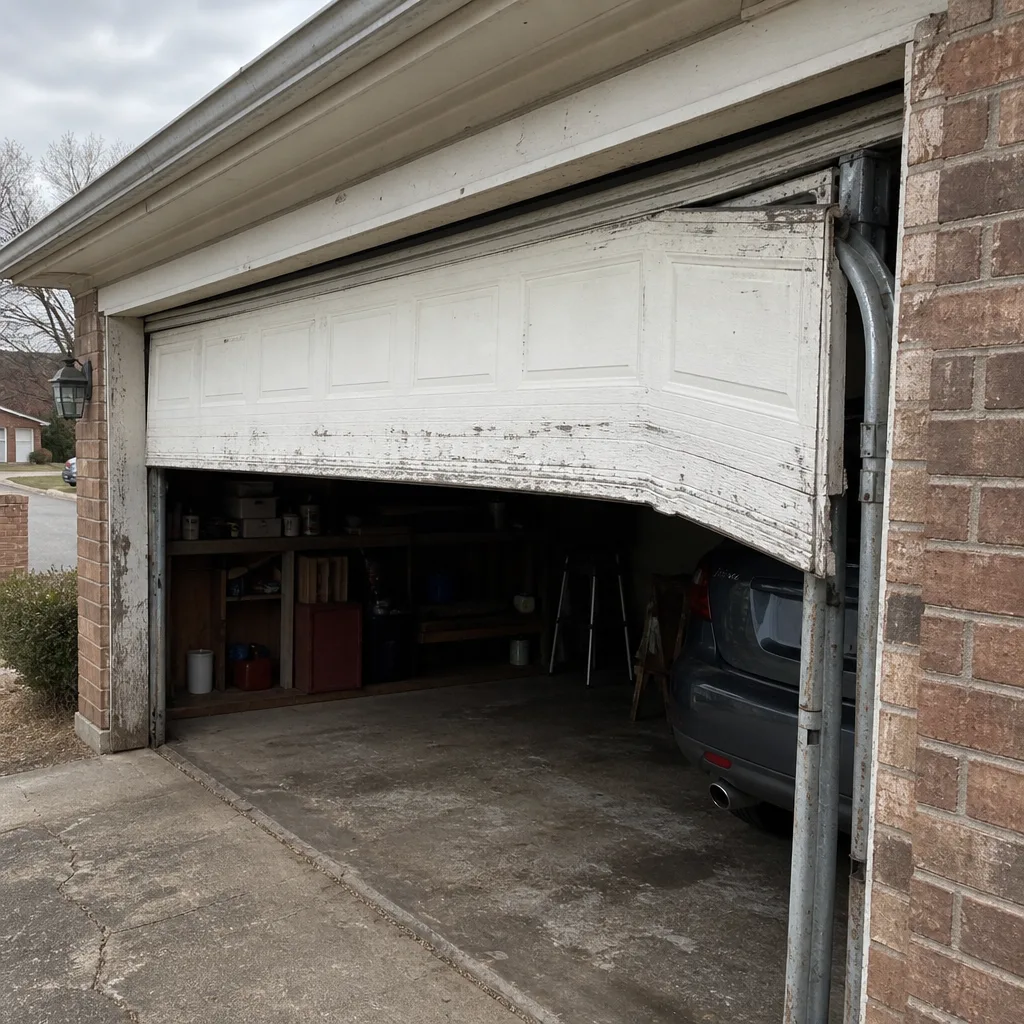 Before
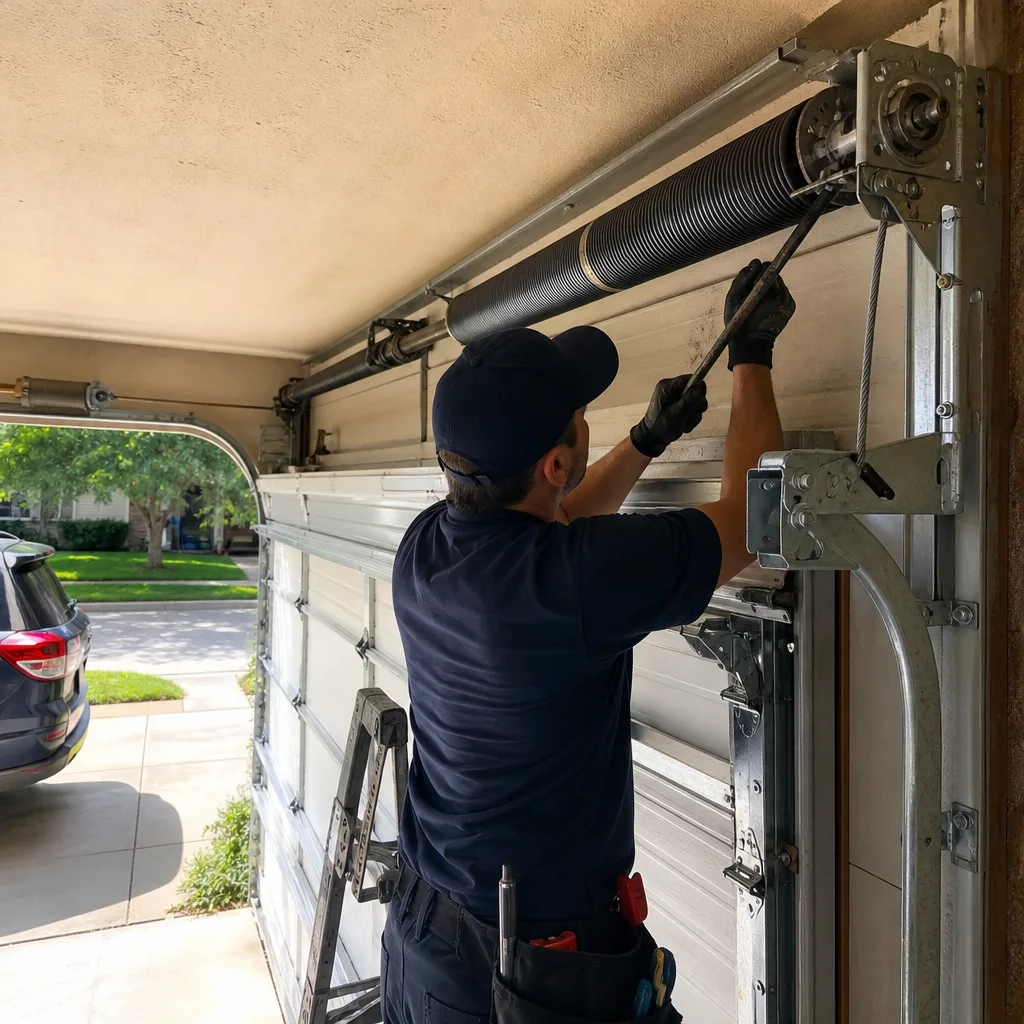 After
After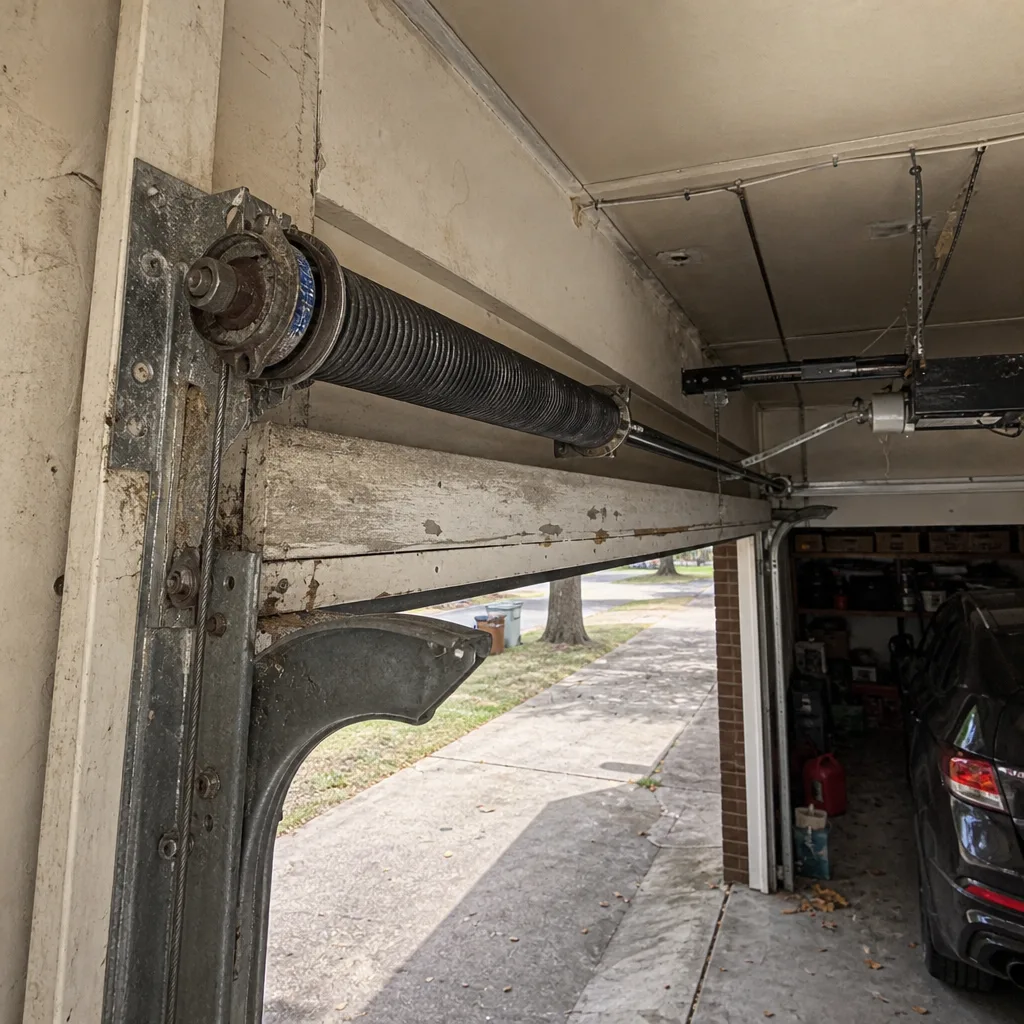 Before
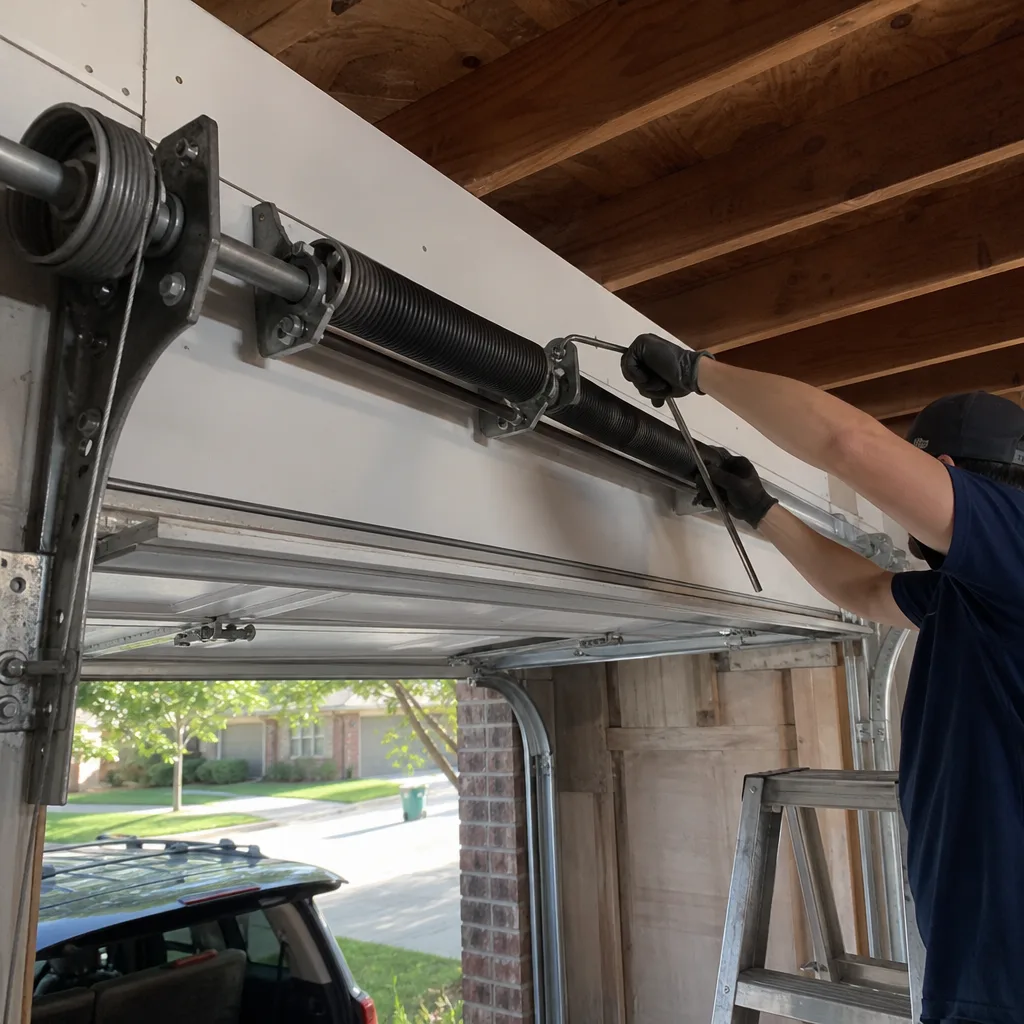 After
After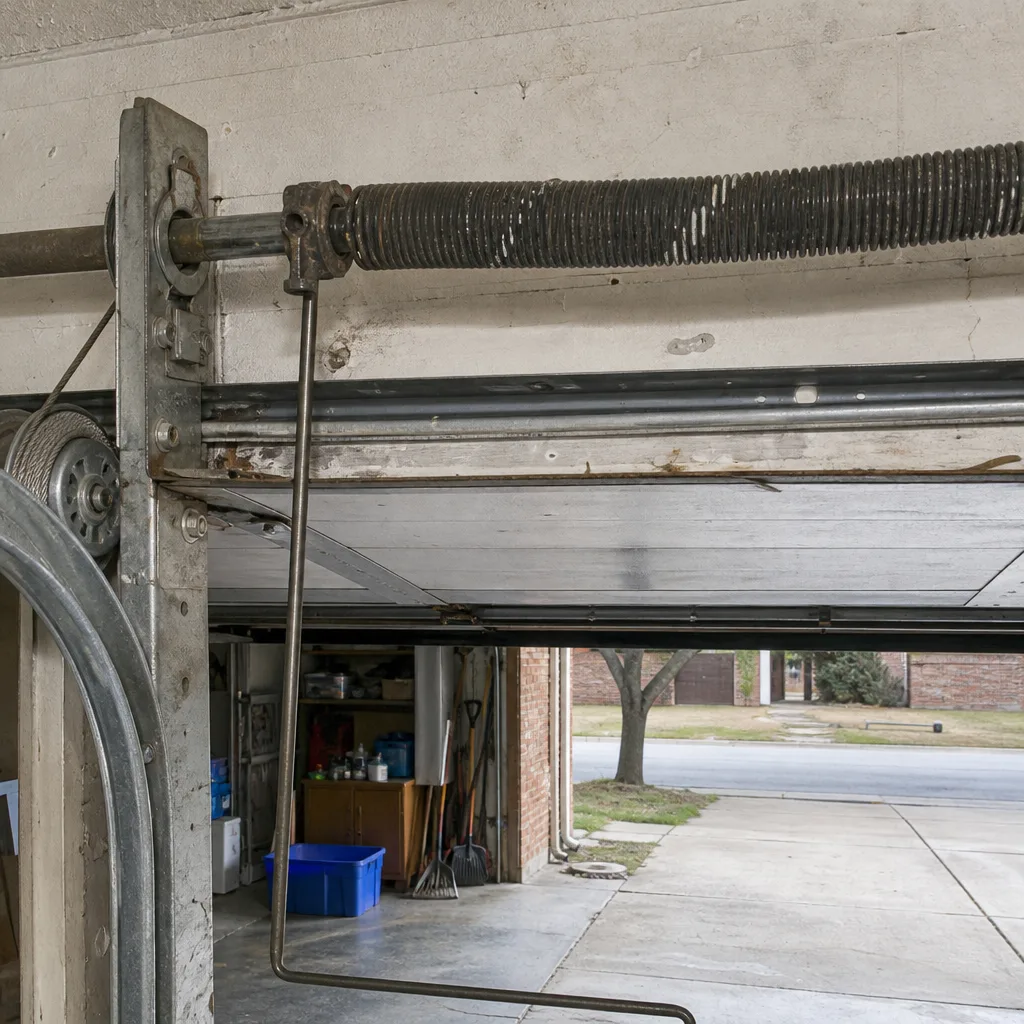 Before
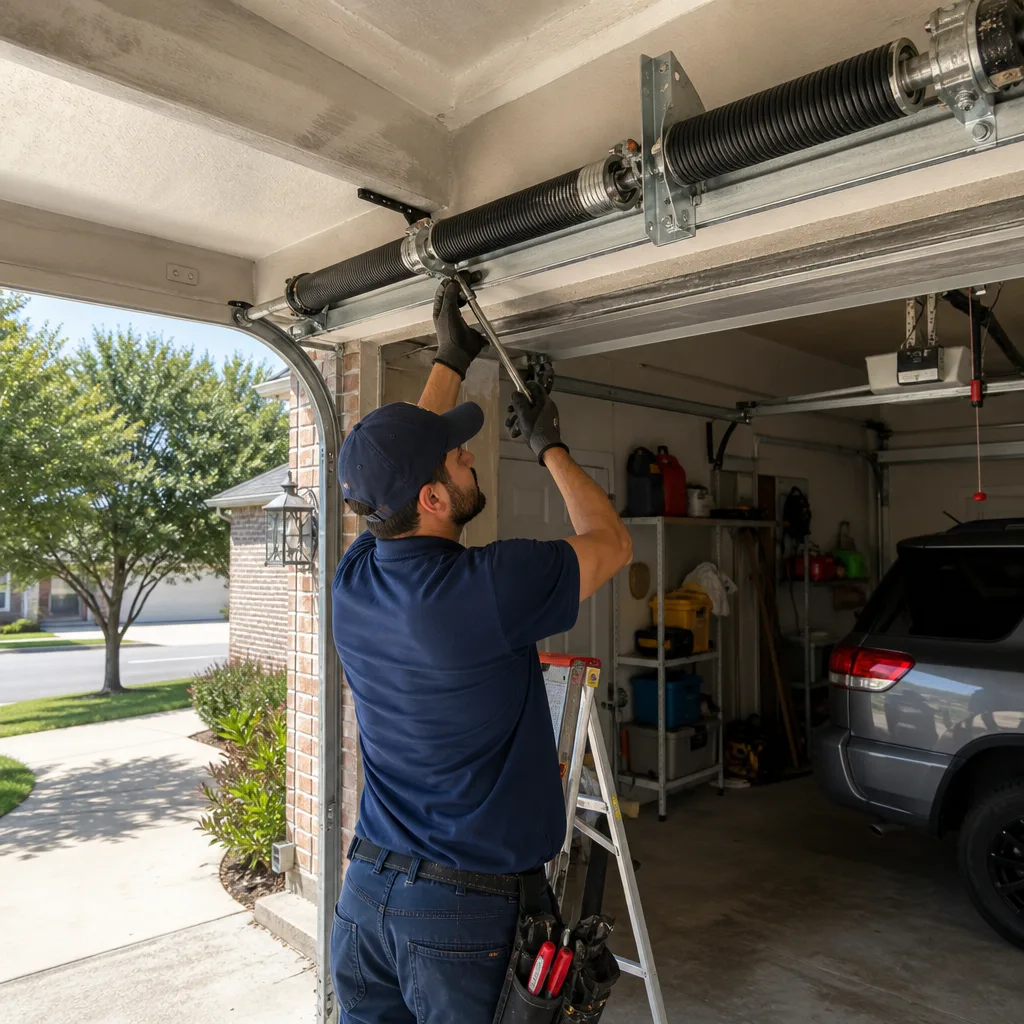 After
AfterWhen to Call a Professional
Call a pro when the problem involves a spring, a cable, a bent track, or a door that’s fallen out of balance. Call a pro when you’ve already attempted a repair and the door is now louder, jerkier, or more resistant than before. Call a pro when the door won’t open and your car is trapped inside, because the fix usually needs a truck full of parts and two experienced hands. Marlow Garage Door Repair Fort Worth offers free estimates across Fort Worth, a written price before any work starts, and a live person on the phone around the clock. Call (682) 432-0305, and we’ll give you an honest assessment over the phone before anyone drives out.
Frequently Asked Questions
You can safely clean and align photo-eye sensors, lubricate hinges and rollers, replace the bottom weather seal, tighten loose rail bolts, and reprogram remotes and keypads. These tasks don’t involve stored energy, and the cost of a mistake is measured in minutes and a few dollars, not a hospital visit.
Expect to pay $150 to $290 for a spring replacement in Fort Worth, depending on whether you have a single spring, a pair of torsion springs, or extension springs. At Marlow, you’ll see the exact number in writing before we begin, and the repair carries a 365-Day Done Right Promise. Call (682) 432-0305 for an exact quote.
Yes, in most cases. Spring and cable failures are urgent because they can leave your car trapped inside the garage, and we prioritize those calls. Our phone is answered by a real person 24 hours a day, 7 days a week, and we’ll get you on the schedule for the earliest possible time, with a live arrival window you can track.
In most cases, yes. Door and opener manufacturers like Clopay, Genie, and LiftMaster write their warranties around professional installation and service. If you install incorrect springs or a mismatched opener, the manufacturer can deny a subsequent warranty claim. Professional repairs from a company trained on your specific brand keep the warranty intact.
The most common warning sign is a sudden, sharp noise from the garage (often described as a gunshot) when the spring actually fails. Before that, you may notice the door feeling heavier than usual, opening unevenly, or the opener struggling more than it used to. Springs also show visual signs: a gap in the coils, rust, or visible wear at the ends. If you notice any of these, schedule a professional inspection before the failure strands your car.
Not with us. At Marlow Garage Door Repair Fort Worth, the written price is delivered before any work begins, and the number on the invoice matches the number you agreed to. If a technician discovers an additional issue during the repair, it’s quoted separately and approved by you before anything else happens. No surprises, no “well, it turns out the track also needs work” after the fact.
The Bottom Line
The DIY garage door question in Fort Worth resolves to one rule: if the task involves a spring, a cable, a track, or the door’s weight, call a professional. If it involves cleaning, lubricating, programming, or tightening, you’re in the DIY zone. The cost comparison, done honestly, shows that spring replacement savings evaporate in the failure scenario, and the code, warranty, and home sale complications pile up quietly until they don’t. Do the safe stuff. Call for the rest. Your hands will thank you, and your door will last longer for it.
Learn More About Garage Door Repair in Fort Worth
- Marlow Garage Door Repair Fort Worth home
- Garage Door Repair in Fort Worth
- Garage Door Spring Repair in Fort Worth
- Garage Door Cable Repair in Fort Worth
Ready to stop wrestling with a garage door that’s fighting back? Call Marlow Garage Door Repair Fort Worth at (682) 432-0305 for a free estimate, or book online and see your written price before we ever show up. We serve all of Fort Worth, from Wedgwood to Saginaw to stops along I-30 and I-20, and we’ve been here since 2002.
Written by Jaylen Ross, Owner at Marlow Garage Door Repair Fort Worth, serving Fort Worth since 2002.