
Last updated October 16, 2026
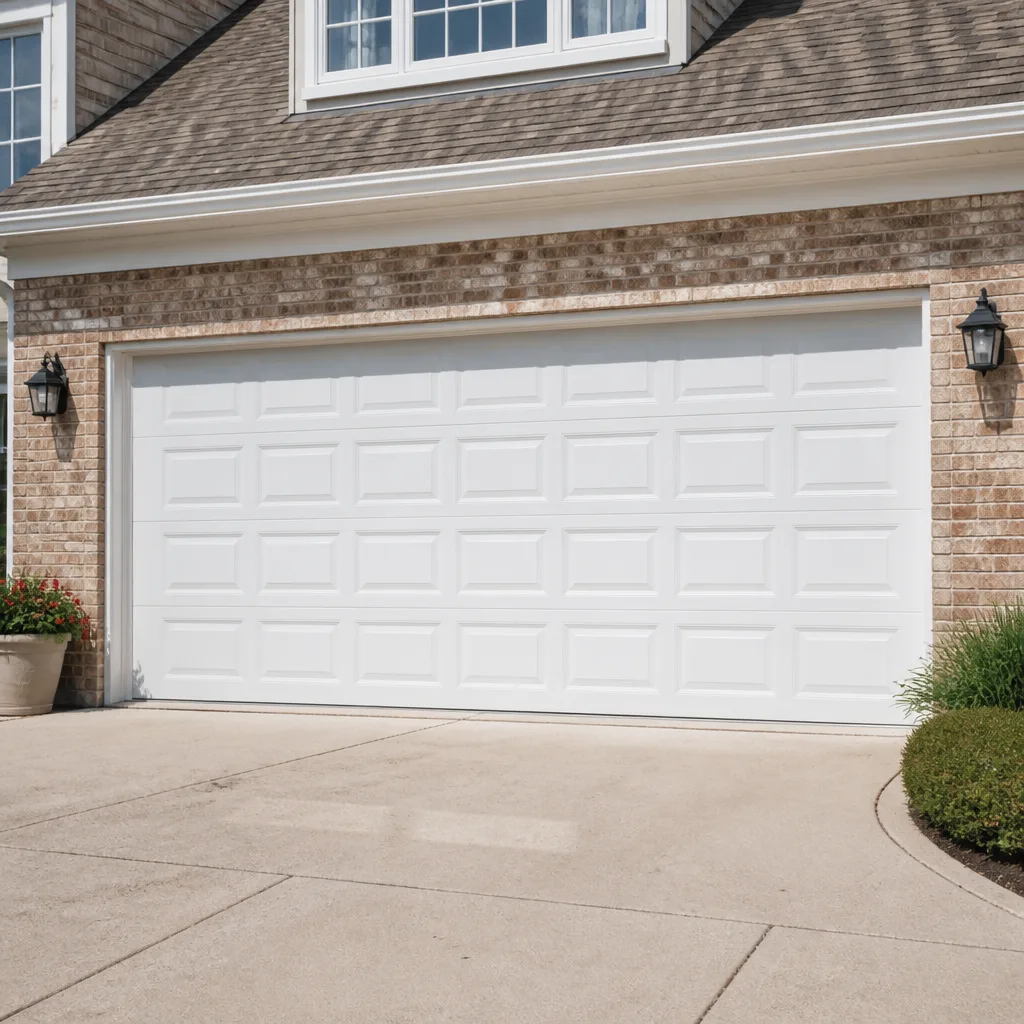 Raised-panel steel
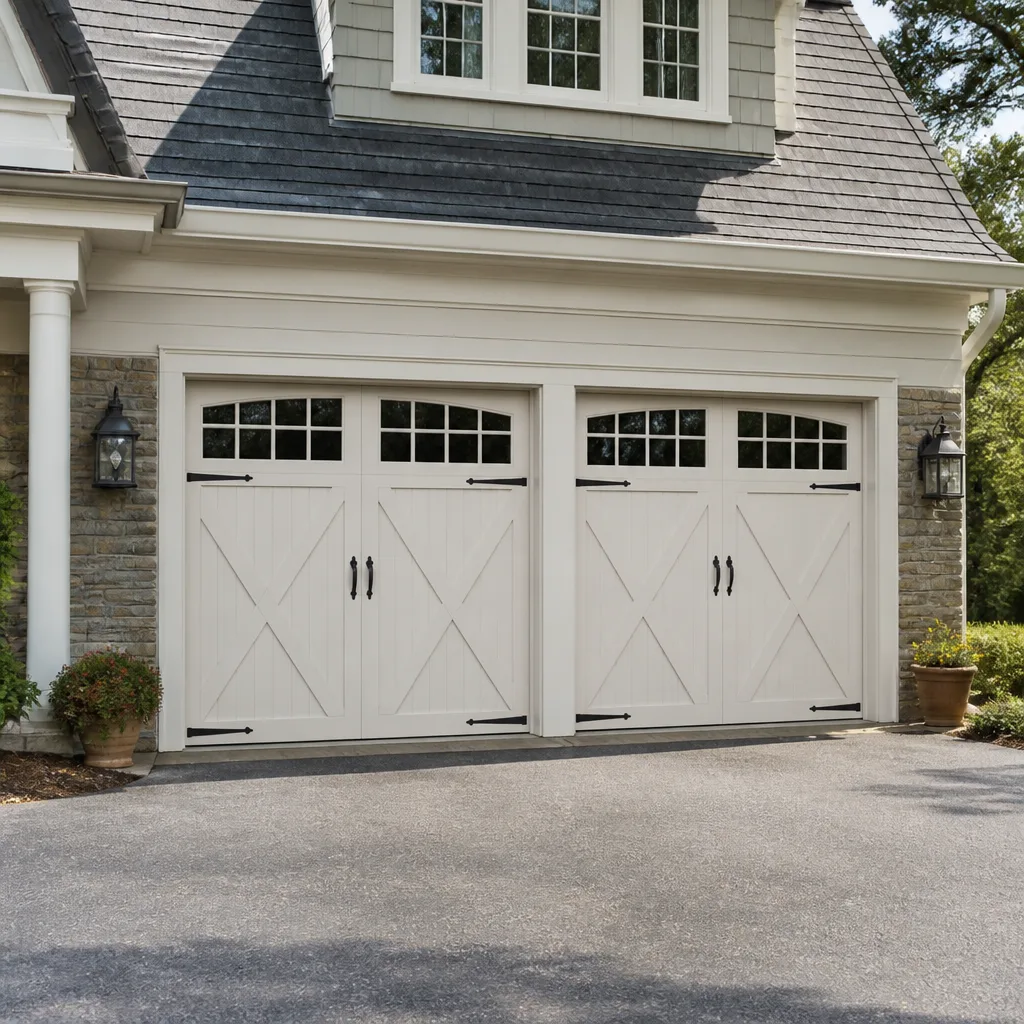 Carriage house
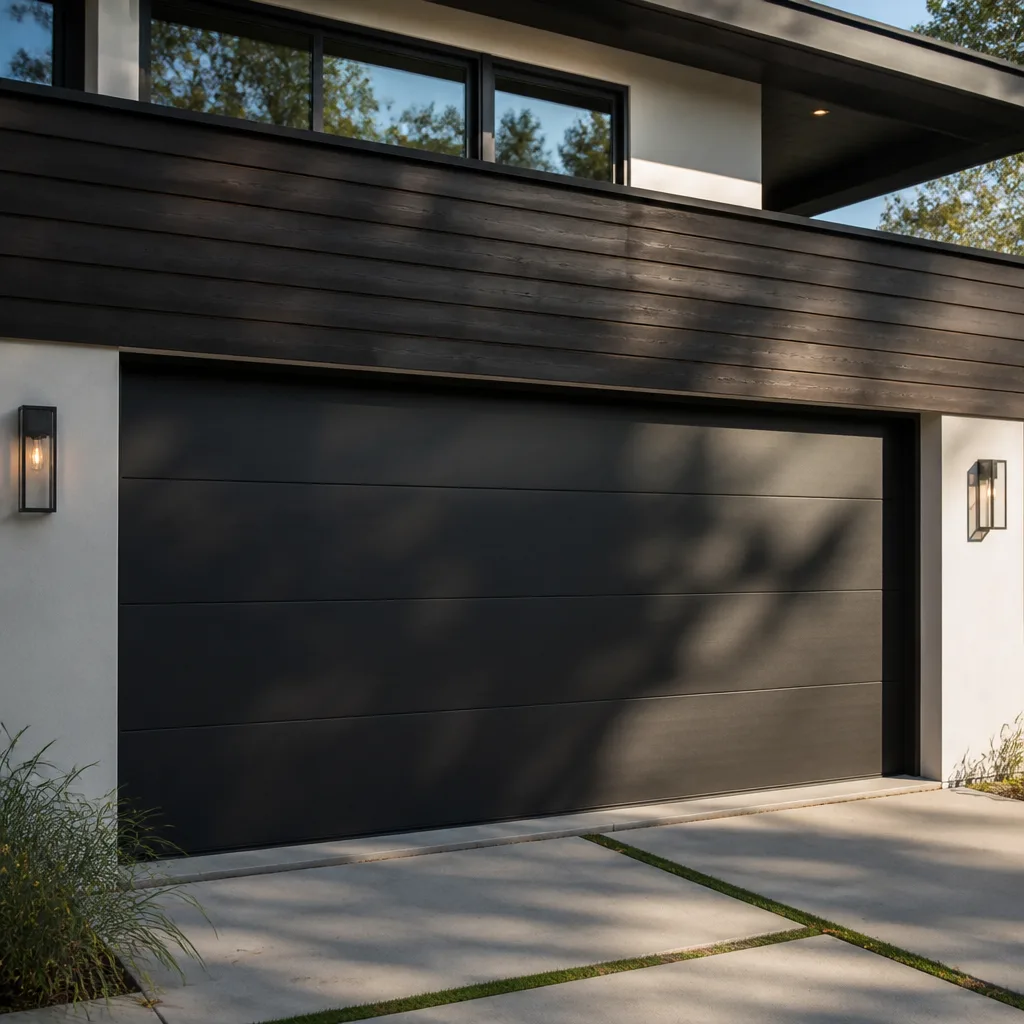 Modern flush
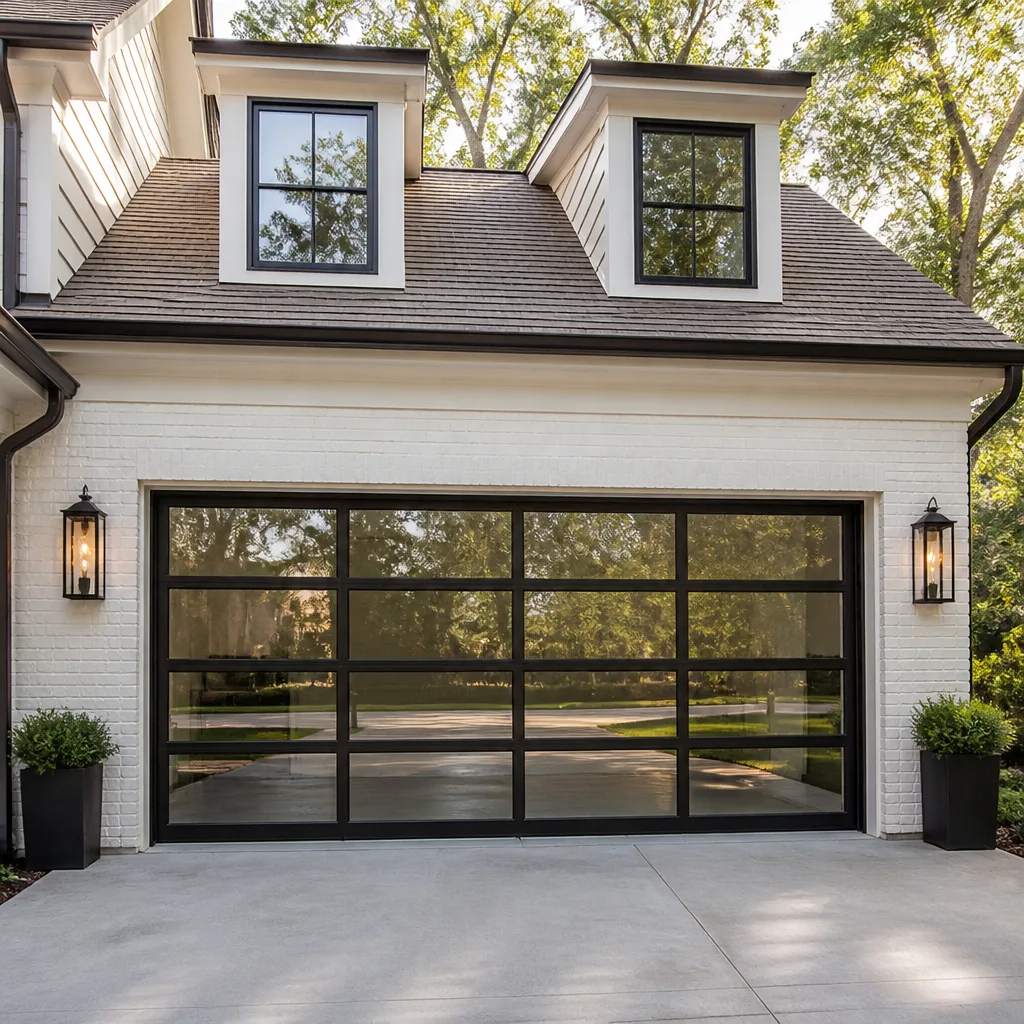 Full-view glass
 LiftMaster openers
 Chamberlain openers
Full 25-point door and opener safety check with every visit - springs, cables, rollers, tracks, and your LiftMaster or Chamberlain opener included
You get a price before we start. It does not change when the truck arrives.
Get your free estimateGarage Door Warning Signs: A Fort Worth Homeowner’s Reference Guide
Here’s a statistic that should make every Fort Worth homeowner pause: most garage door failures that end in emergency calls were audible, visible, or otherwise detectable for six to eight weeks before the actual breakdown. The grinding noise you hear on Tuesday morning isn’t new. It’s been there since March. Your brain just filed it under “garage door noises” and moved on. This guide will teach you to hear what your door is saying before it stops saying anything at all, and before a $180 fix becomes a $600 emergency replacement. For a broader overview, see The Complete Guide to Garage Door in Fort Worth.
Quick Answer
The most common garage door warning signs are grinding or popping sounds from the springs, a door that opens slower than it used to, visible rust on springs or cables, gaps under the door when closed, and jerking or hesitation during operation. In Fort Worth, humidity swings and clay soil movement add a few signals you won’t see in generic guides: bottom seal gaps from foundation shift, and rust patterns that accelerate faster than the national average. Any of these signs means your door is communicating a problem you can still fix affordably.
Styles & brands we work with
Table of Contents
- The Sounds Your Garage Door Makes (And What Each One Means)
- Visual Warning Signs Fort Worth Homeowners Should Watch For
- Why a Slower Door Is a Spring Problem, Not an Opener Problem
- The One-Jerk Test: Reading Hesitation, Jerking, and Reversal
- The Red, Yellow, Green Urgency Framework
- Fort Worth-Specific Factors: Climate, Soil, and Foundation Shift
- Common Mistakes to Avoid
- When to Call a Professional
The Sounds Your Garage Door Makes (And What Each One Means)
Garage doors are mechanical systems, not magical ones. Every sound they make corresponds to a component doing something it shouldn’t. Here’s what we’ve learned from thousands of service calls across Fort Worth: the sound alone usually tells you what’s failing, even before we see the door.
Grinding: A grinding or gravelly sound almost always comes from the torsion spring, the horizontal coil mounted above your door opening. When that spring loses lubrication or begins wearing against its mounting hardware, it produces a sound that most people wrongly attribute to the opener motor. The opener doesn’t grind. It hums. If you’re hearing grinding, your spring is telling you it’s working harder than it should be.
Popping: A sharp pop or series of pops during door movement usually indicates a spring binding against its shaft or bearing. In Fort Worth, where summer humidity fluctuates between morning and afternoon by 40 percent or more, springs expand and contract daily. That thermal cycle stresses the coil mountings, and popping is often the first audible cue that a mounting bracket is loosening.
Squealing: A high-pitched squeal that happens with every cycle is usually a dry roller or hinge. This is the cheapest fix in this guide, and also the most commonly ignored. Left alone, a dry roller eventually seizes, which throws the door off balance and stresses the springs and cables. What could have been a $25 lubrication call becomes a full roller-and-cable replacement.
Humming: If your opener hums but the door doesn’t move, you’re hearing the motor trying to work against a spring that has already failed. This is one of the few sounds that means the failure you’re hearing has already happened, not one that’s coming. Stop pressing the button and call for service. Continuing to try will burn out the opener motor.
Rattling: A rattle typically comes from loose hardware: track bolts, hinge screws, or the opener chain. On older Fort Worth homes in neighborhoods like Wedgwood or Ryan Place, years of soil movement can shift the track alignment just enough that fasteners back out. A rattle is your door announcing that something is loose, and loose hardware is the beginning of misalignment.
Visual Warning Signs Fort Worth Homeowners Should Watch For
You don’t need to be mechanically inclined to spot trouble. You just need to look at your door once a month. Here are the visual cues we tell every homeowner to check, and what each one signals.
Rust on springs or cables: Fort Worth’s humidity, especially from May through September, is brutal on untreated steel. Surface rust on a torsion spring isn’t cosmetic. It weakens the metal’s tensile strength, and a weakened spring under load eventually snaps. Rust on cables is worse, because cables are under constant tension, and a frayed cable is a release waiting to happen.
Paint bubbling or flaking on the bottom panel: This signals water infiltration into the panel core. In Fort Worth, a door that faces south or west takes a beating from afternoon thunderstorms and wind-driven rain. Steel doors with compromised paint will rust from the inside out. Once the panel core is saturated, the panel loses structural integrity, and replacement is usually the only fix.
Gaps under the door when closed: If you can see daylight under your closed door, you’re losing conditioned air and inviting pests, but you’re also seeing evidence of one of two problems: the bottom seal has degraded, or the door itself is slightly out of level. On Fort Worth’s expansive clay soils, foundation movement is common, and a door that was perfectly level at installation can shift a quarter inch over a decade. The seal is a cheap fix; the out-of-level door needs adjustment.
Cable wear or fraying: Garage door cables are under extreme tension. In fact, we tell homeowners never to touch them for exactly this reason. If you see loose strands, kinks, or rust on your cables, that’s a red-light situation: stop using the door and call for service. A snapped cable under load is dangerous and can cause the door to fall suddenly. Our garage door cable repair in Fort Worth page explains exactly what happens during a cable failure and how we handle it.
Bent or uneven track alignment: Stand at the back of your garage and look down each track. If one side curves inward or outward even slightly, the door is working against itself on every cycle. This accelerates wear on rollers, hinges, and the opener. Track misalignment in Fort Worth often traces back to the same soil movement that affects foundations and door frames.
Why a Slower Door Is a Spring Problem, Not an Opener Problem
Here’s the most misunderstood diagnostic in garage door repair: when a door suddenly starts opening slower, most homeowners assume the opener motor is dying. Nine times out of ten, it’s not the motor at all. It’s the torsion spring losing tension.
Your opener motor doesn’t actually lift the door. The spring does. The opener motor just guides the spring’s work. When a torsion spring is properly calibrated, it counterbalances nearly the entire weight of the door. The opener only has to handle a fraction of the load, which is why a single motor can open a 150-pound door without strain.
As a spring ages, it loses tension through metal fatigue and a gradual reduction in coil strength. That means the spring is counterbalancing less weight, which means the opener is picking up the difference. A door that opens slower than it did a year ago is telling you the spring is doing less work and the motor is doing more. If you ignore that signal, the spring eventually loses enough tension that it snaps, or you burn out the opener motor trying to compensate.
In Fort Worth’s climate, spring degradation follows a predictable pattern. High summer temperatures accelerate metal fatigue, and the thermal expansion-contraction cycle of our humid summers and dry winters stresses spring coils continuously. We regularly replace torsion springs on homes in Arlington Heights and TCU-area neighborhoods that are only five to seven years old, which is well short of the national average lifespan of 10,000 cycles, or roughly seven to ten years of normal use. The springs aren’t defective; the climate is just demanding.
If your door is opening slower than it did six months ago, book a spring inspection. A spring adjustment costs a fraction of what a full replacement costs, and it often restores your door’s balance immediately. Our garage door spring repair in Fort Worth page covers spring types, costs, and what to expect during a service call.
The One-Jerk Test: Reading Hesitation, Jerking, and Reversal
You can learn more about your garage door in 30 seconds of observation than most people learn in a year. Here’s a simple test we walk every homeowner through: stand where you can see the full door, press the opener, and watch the door’s movement from start to finish. Don’t walk away. Watch the entire cycle. Then note what you see.
Hesitation at the start: If the door pauses for a beat after you press the button, then begins moving, you’re likely seeing a spring that’s near the end of its tension life. The opener has to build extra torque to overcome the imbalance, and that delay is the motor working harder than it should. On a properly balanced door, movement starts immediately.
Jerking mid-cycle: A door that jerks partway up usually has one of three problems: a misaligned track, a worn roller, or a spring that’s losing tension unevenly. In Fort Worth, where expansion and contraction of metal tracks happens daily, the track bolts sometimes loosen just enough to throw the door out of alignment by a fraction of an inch. That fraction is all it takes.
Reversal on the way down: Many homeowners assume a door that reverses on the way down has an overly sensitive safety sensor. That’s possible, but equally common is a door that’s out of balance and trips the opener’s force sensor. When the door is properly balanced, the opener applies a consistent, predictable force. When the spring is failing, the opener has to apply more force at certain points in the cycle, which trips the safety mechanism and reverses the door. If your door reverses halfway down for no apparent reason, don’t just adjust the sensors. Check the spring balance first.
The visual test: Run the door to halfway and release it. If it stays in place, the spring is balanced. If it drifts down, the spring is too weak. If it shoots up, it’s overwound. Both are problems. This is a safe test because the door is already at rest; you’re just releasing the opener and observing.
The Red, Yellow, Green Urgency Framework
We built this framework because every homeowner asks the same question when they call us: “How urgent is this?” Here’s the answer in a structure you can use immediately.
Green: Book this week. These are the signals that indicate a developing problem, but not an immediate safety risk. A squealing roller, a door that’s slightly slower than last season, minor surface rust on the spring, or a bottom seal that’s starting to gap. None of these will fail catastrophically in the next seven days, but all of them get more expensive the longer you wait. Book a tune-up at your convenience.
Yellow: Book today. These signals mean a component is failing and will break soon. A grinding spring, a door that jerks mid-cycle, visible fraying on cables, or a door that reverses unexpectedly. The failure window on these is measured in days or weeks, not months. Call the same day you notice them.
Red: Stop using the door and call now. These are the conditions that create the emergency calls we get at 2 a.m. A snapped spring, a door that’s stuck halfway and won’t move, a cable that’s visibly unwinding, or any sound like a gunshot coming from your garage. A door in this state can fall, and a falling garage door can injure people and damage vehicles. Do not attempt to move it. Disconnect the opener if you can do so safely, and call for emergency service. For any urgent situation, the full scope of our garage door repair in Fort Worth service includes same-day response for red-light calls.
Fort Worth-Specific Factors: Climate, Soil, and Foundation Shift
Seasonal Garage Door Care for Fort Worth: Year-Round Homeowner’s Guide and other local resources matter because garage door guides written for a national audience miss the factors that are unique to what we see every week in Fort Worth. Here are the three conditions that make our market different.
Expansive clay soil and foundation movement: Fort Worth sits on some of the most expansive clay soil in the country. It swells when wet and shrinks when dry, and that movement transfers directly into garage foundations. A foundation that shifts even an inch will throw a garage door out of level, which manifests as doors that stick, doors that don’t seal, and tracks that pull away from their mounting points. This is why we see more track alignment issues in Fort Worth than in cities built on rock. The door isn’t the problem; the ground under it is, and the fix is an adjustment that accounts for the shift.
Humidity swings and metal fatigue: Fort Worth’s summer humidity routinely hits 70 percent in the morning and drops to 30 percent by late afternoon. That daily swing causes metal components to expand and contract, which accelerates fatigue in springs, cables, and mounting hardware. Rust also forms faster here than in dryer climates, which is why we recommend checking your springs and cables for corrosion every six months, not annually.
Storm-driven rain on south-facing doors: A door that faces south or southwest gets hit by wind-driven rain during almost every spring and summer storm. Over time, that water finds its way through worn weatherstripping and into the bottom panel, causing the paint bubbling and panel rot we mentioned earlier. Fort Worth homeowners with south-facing garage doors should inspect their weatherstripping every fall and replace it at the first sign of cracking or gaps.
These conditions are why a garage door in Fort Worth might show wear at five years that a door in Phoenix wouldn’t show at ten. They’re also why home-specific advice, from a local provider who knows the market, matters more than generic guidance.
Common Mistakes to Avoid
- Lubricating the wrong parts. Garage door springs, rollers, and hinges need lubrication, but the track itself should stay dry. Greasing the track attracts dirt and creates the very friction you’re trying to solve. Use a silicone-based lubricant on moving parts only.
- Ignoring the sound. A garage door that’s making a new noise is telling you something. The window to fix a grinding spring cheaply is measured in weeks, not months. Every day you ignore it, the spring loses more tension and the fix gets more expensive.
- Testing the safety reversal with your body. Never stand under a closing garage door to test whether it will reverse. Use a roll of paper towels placed on the floor. If the door crushes the roll instead of reversing, your safety system needs service immediately.
- Replacing the opener when the spring is the problem. If your door is slow or jerky, and you replace the opener motor, you’ll have a new opener doing the same work the old one was doing: struggling against a tired spring. Diagnose the spring first. It’s the cheaper fix and usually the right one.
- Adjusting the cables yourself. Garage door cables are under tension that can maim or kill if released incorrectly. We cannot overstate this. If you see a frayed or damaged cable, do not touch it. Call a professional. This is one of the few home repairs where the DIY risk genuinely isn’t worth it.
- Relying on a four-hour service window. If you’ve scheduled garage door service in Fort Worth and been given a four-hour window, you already know the frustration of waiting around. The standard for home services has changed. Look for a provider who gives you a live arrival time, not a window. The technology exists, and there’s no reason to accept less.
When to Call a Professional
Some garage door issues are safe to handle yourself, like lubricating rollers or replacing a bottom seal. Others are not. Call a professional when you see a snapped spring, a frayed cable, a door that’s stuck halfway and won’t move, or any red-light condition from the framework above. Not sure who to call? Read How to Hire a Garage Door Contractor in Fort Worth: A Step-by-Step Guide. These situations involve components under extreme tension, and the injury risk from DIY attempts is real and documented.
For everything else, a professional assessment is still the fastest path to certainty. Marlow Garage Door Repair Fort Worth offers free estimates across Fort Worth, and we give you a written price before any work begins. Call (682) 432-0305 to book, or visit our Marlow Garage Door Repair Fort Worth home page to see how the process works.
See the difference
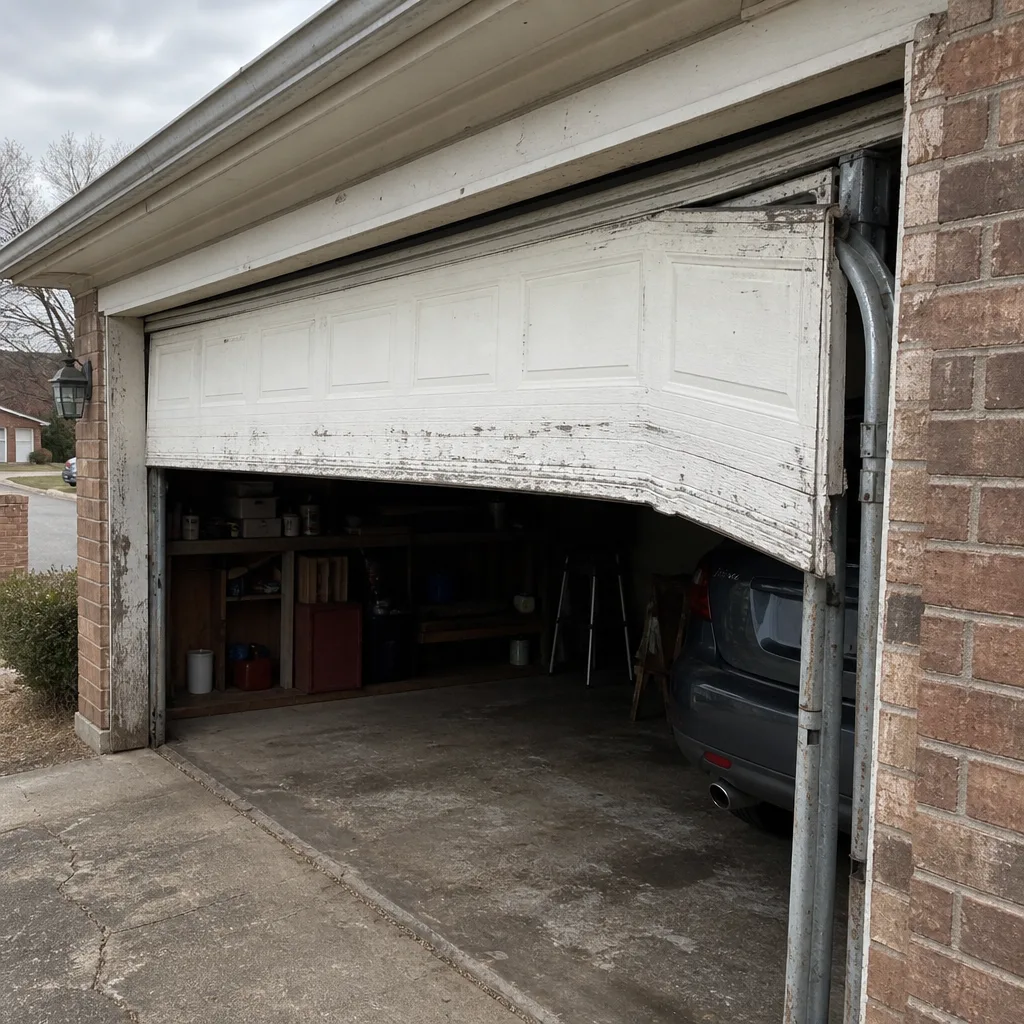 Before
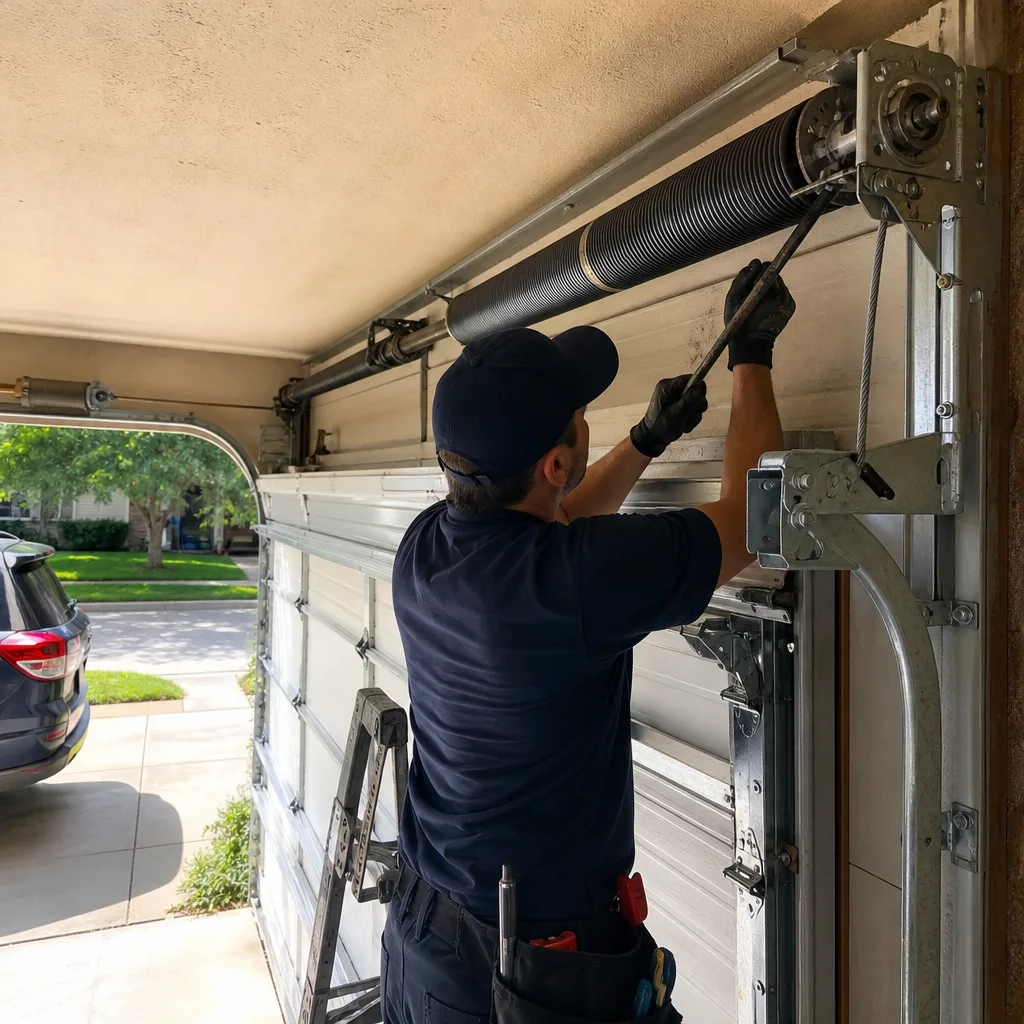 After
After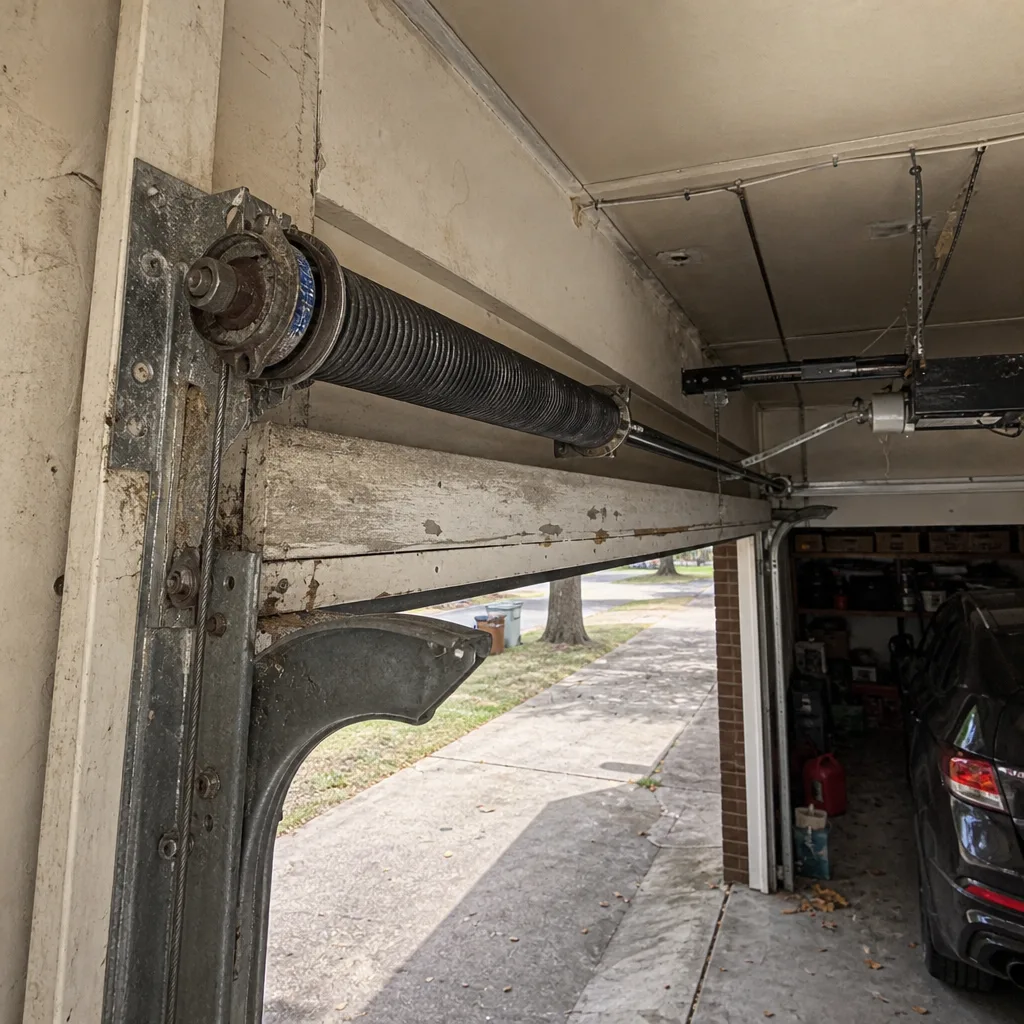 Before
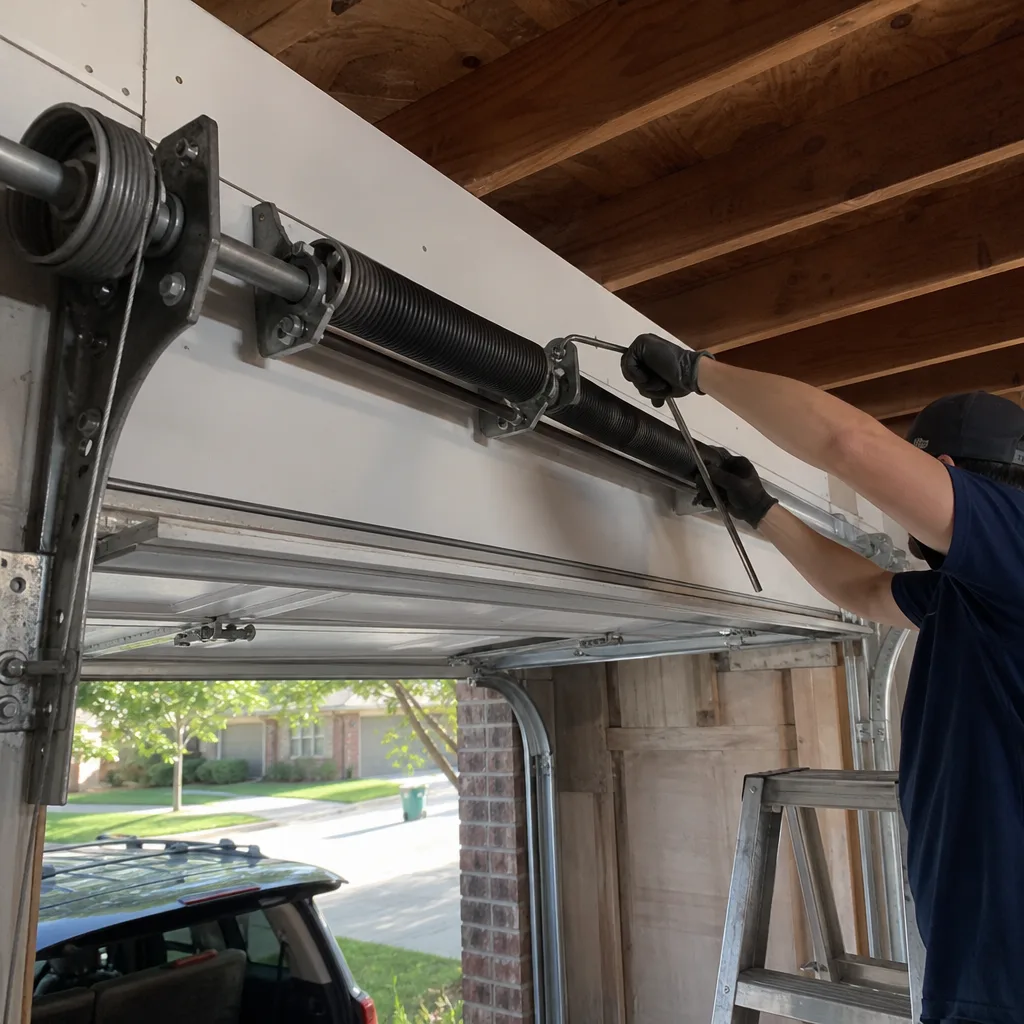 After
After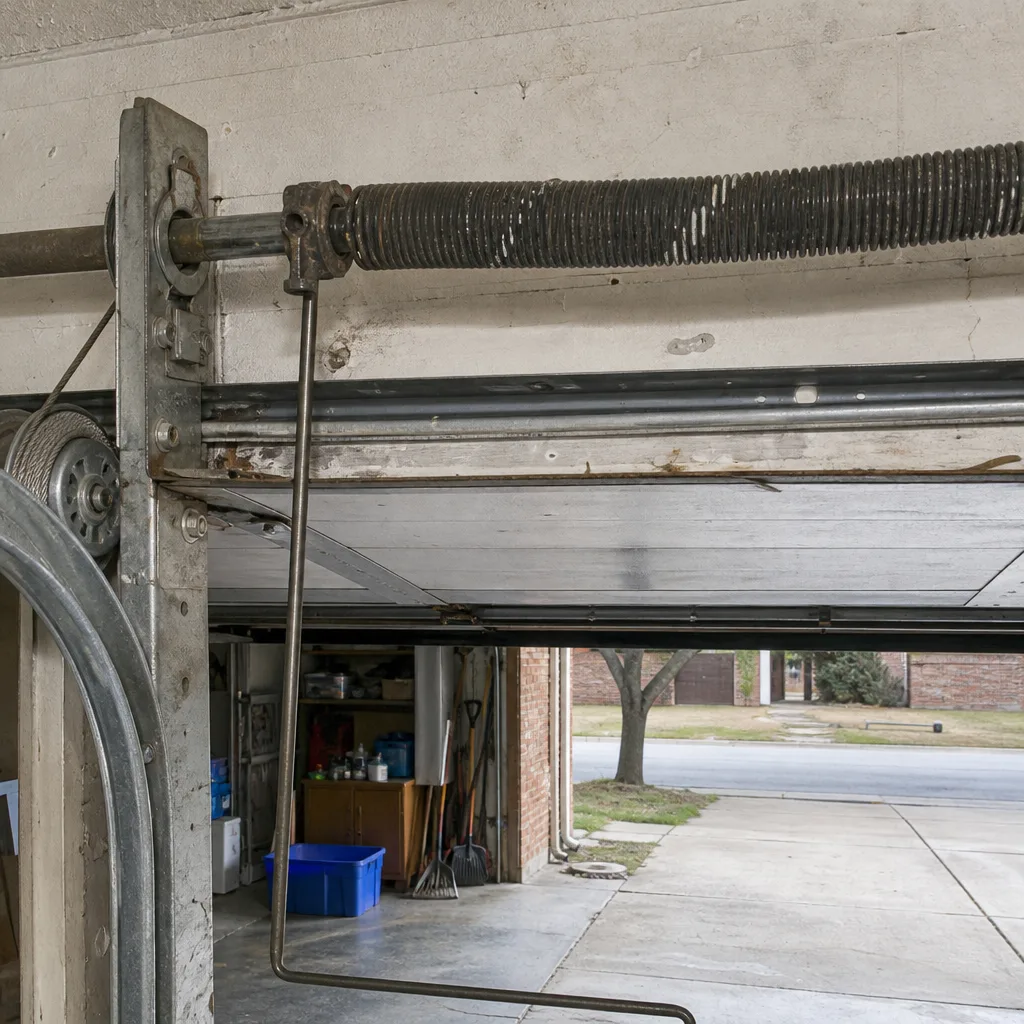 Before
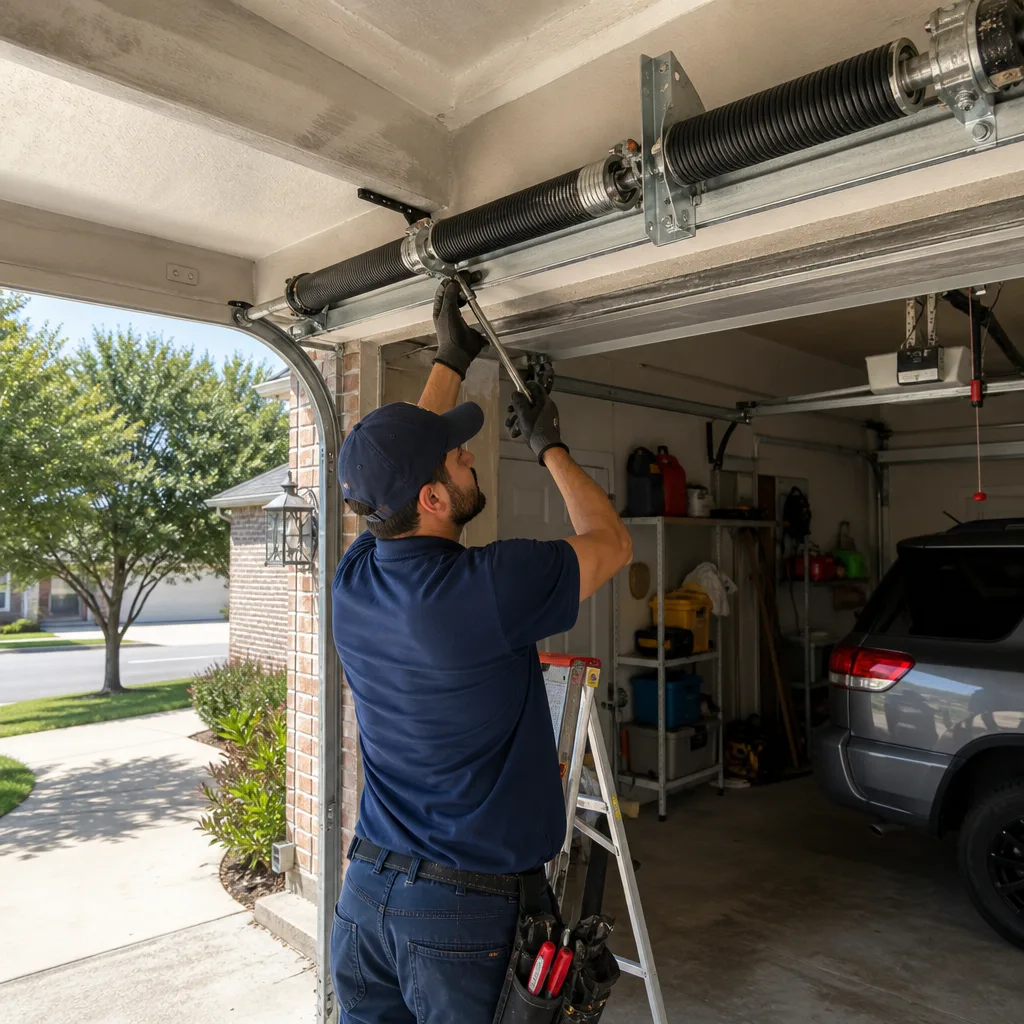 After
AfterFrequently Asked Questions
Garage door spring repair in Fort Worth typically ranges from $150 to $290 for a torsion spring replacement, depending on spring size and type. A spring adjustment, which is the fix for a door that’s slightly out of balance, usually falls in the $80-$120 range. Both prices are quoted and agreed before any work starts.
A jerking garage door usually indicates a misaligned track, a worn roller, or a spring losing tension unevenly. In Fort Worth, track misalignment is especially common due to shifting clay soil under the foundation. The fix is typically an adjustment or a roller replacement, not a full door replacement.
Yes, a squeaky garage door is usually a dry roller or hinge, and a silicone-based lubricant applied to those moving parts often resolves it. However, if the squeal persists after lubrication, or if you hear grinding instead of squealing, the problem is likely the spring, and that requires professional attention.
A garage door that reverses on the way down is usually tripping the opener’s safety force sensor, which means the opener is detecting more resistance than it should. That resistance often comes from a spring that’s losing tension, forcing the opener to work harder. It can also be a misaligned safety sensor, but spring balance should be checked first.
We recommend an annual tune-up for garage doors in Fort Worth, and a visual inspection of springs and cables every six months due to the humidity and thermal cycling of the local climate. Most emergency calls we respond to involve doors that haven’t been serviced in three or more years.
We service all major brands, including Amarr, Wayne Dalton, Craftsman, and Raynor doors, as well as LiftMaster, Chamberlain, and Genie openers. Our technicians are trained specifically on these brands, so the person arriving at your door already knows your system. Call (682) 432-0305 for a free estimate on any brand.
The Bottom Line
Garage doors in Fort Worth fail gradually, with warning signs that are audible, visible, and measurable for weeks before the actual breakdown. A squeal, a slower open, a gap under the door, or a jerk mid-cycle all point to specific component failures that are cheaper to fix early than to replace late. Pay attention to the sounds your door makes, check your springs and cables every six months, and treat any red-light condition as a stop-and-call emergency. The difference between a $180 fix and a $600 replacement is usually just how long you waited. For Fort Worth homeowners who want a written price before any work begins, garage door spring repair in Fort Worth is our most requested service, and every job is backed by our 365-Day Done Right Promise.
Written by Jaylen Ross, Owner at Marlow Garage Door Repair Fort Worth, serving Fort Worth since 2002. Explore more guides & resources from our team.